

How to Choose the Right Radial Drilling Machine for Industrial Use
Choosing the wrong radial drilling machine costs you time, money, and floor space. The right choice comes down to five things: drilling diameter, arm reach, workpiece weight, motor power, and spindle speed range. Match these five to your actual production needs and you’ll pick the right model the first time. This guide shows you exactly how.
You bought a radial drilling machine. Six months later, it can’t handle the job.
The workpiece is too heavy. The arm doesn’t reach far enough. The motor bogs down on structural steel. And now you’re looking at a second purchase to fix a problem that didn’t need to happen.
This is one of the most common mistakes in Indian tool rooms and fabrication shops. A radial drilling machine looks like a simple buy. You compare a few prices, check the drilling diameter, and place the order. But the specs that actually matter are the ones most buyers overlook.
Here’s how to get it right the first time.
What Is a Radial Drilling Machine and How Does It Work?
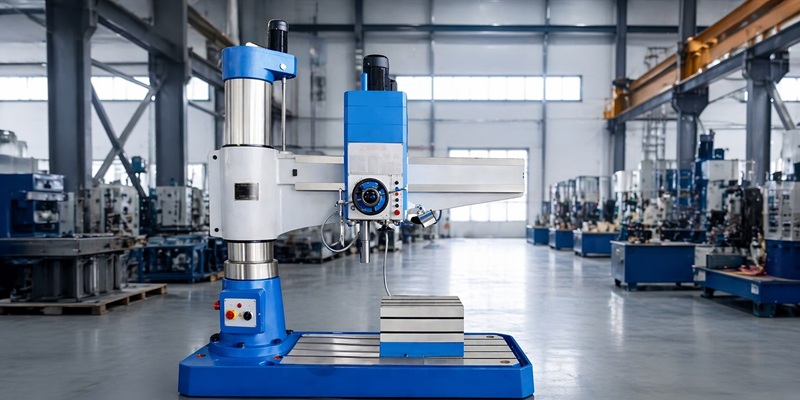
A radial drilling machine has a movable arm that swings 360° around a vertical column. The drill head slides along this arm and positions the spindle anywhere over the workpiece. You move the drill to the work, not the other way around.
That’s the key difference from a pillar drill. With a pillar drill, you move the workpiece to align with the spindle. That works fine for small, light components. It doesn’t work when your workpiece is a 500 kg steel casting or a 3-metre structural frame.
Beyond drilling, a radial drill handles reaming, tapping, counterboring, and spot-facing, all in one setup, without re-clamping. That’s a real time-saver on the shop floor.
For precision holes in hardened materials, many tool rooms pair a radial drill with a CNC EDM drill machine to cover both standard and hard-material drilling needs.
The 5 Factors That Determine the Right Model
1. Drilling Diameter: Start Here First
Your required maximum drilling diameter cuts the list fast. Pick a machine rated at least 10 mm above your largest planned hole size. That buffer keeps your spindle from working at its limit on every job.
Here’s a simple breakdown:
Going too small overloads the spindle and gives you poor hole finish. Going too large wastes power and floor space. Start with your hardest, largest job and work backward.
2. Arm Reach: Match It to Your Widest Workpiece
The arm reach, measured as spindle-to-column distance, must cover the full width of your largest workpiece. If you’re drilling a 2-metre steel plate, you need at least 2,000 mm of arm reach. Anything shorter means re-clamping, which defeats the whole purpose of a radial drill.
Berlin Machineries’ radial drilling machine range covers 820 mm to 4,000 mm across 7 models. Match the arm reach to your widest workpiece, then add 10 to 15% as a working margin.
3. Workpiece Weight: Check the Base Plate Capacity
A heavy machine stabilises heavy workpieces. The Z3080X25/1, rated for 11,000 kg gross machine weight, handles automotive castings and structural frames that lighter machines can’t hold steady. If your workpieces are heavy and your machine is undersized, you’ll see vibration, poor hole finish, and early wear.
4. Motor Power: Don’t Underpower for Your Hardest Material
Motor power determines what materials you can drill consistently. A general rule:
Underpowering doesn’t just slow you down. It burns out the motor faster and wears the spindle under constant load. Size your motor for your hardest material, not your average job.
5. Spindle Speed Range: More Steps, More Control
Spindle speed controls how you cut different materials. Low RPM for large drills in hard alloys. High RPM for small diameters in aluminium and mild steel.
The Z3050X16/1, for example, gives you 25 to 2,000 RPM across 16 speed steps. That range lets one machine handle your full material mix without changing setups. A machine with only 6 speed steps gives you far less control.
Radial Drill vs. Pillar Drill: Which One Do You Need?
If your workpieces weigh over 400 kg or are too wide to reposition easily, choose a radial drill. If you’re drilling small, light components at a fixed station, a pillar drill is cheaper and takes less floor space. The deciding factor is always the workpiece, not the operation.
A radial drill is standard equipment for fabrication shops, automotive workshops, structural engineering, and shipbuilding. A pillar drill works well for light production and small workshops where the work comes to the machine.
| Factor | Radial Drill Machine | Pillar Drill Machine |
|---|---|---|
| Best for workpiece size | Large, heavy (400 kg+) | Small to medium, easily repositioned |
| Arm reach | 820 mm to 4,000 mm | Fixed column, no lateral reach |
| Max drilling diameter | Up to 125 mm | Typically up to 50 mm |
| Operations | Drill, ream, tap, counterbore, spot-face | Primarily drilling and light tapping |
| Typical buyers | Fabrication, automotive, shipbuilding | Small workshops, light production |
Features That Separate a Production Machine from a Basic One
Not all radial drills are built the same. These features matter in daily production:
Hydraulic Clamping
Locks the column, arm, and drill head simultaneously. This gives you a rigid, vibration-free setup during deep drilling. Manual clamping on cheaper machines shifts under load and kills hole accuracy.
All-Geared Spindle Head
Delivers consistent torque across the full speed range. It extends spindle life and reduces vibration, especially important during long production runs.
Depth Stop Mechanism
Lets you set your target depth once. Every hole in the batch comes out at the same depth. This is critical for blind holes and mating components where depth affects fit.
A good machine should also come with standard accessories included: box table, coolant system, drill chuck with arbor, machine lamp, tool kit, foundation bolts, and installation support. Don’t overlook these when comparing prices.
For complete tool room setups, pairing a radial drill with a surface grinding machine covers both drilling and precision finishing under one roof.
Which Model Fits Your Application?
Here’s a quick application-to-model guide based on Berlin Machineries’ lineup:
Light fabrication / small tool room
Z3040 series
40 mm | 1.5 kW
General fabrication / medium tool room
Z3050X16/1 Most Popular
50 mm | 4 kW
Automotive / mid-heavy manufacturing
Z3080X25/1
80 mm | 7.5 kW
Structural / heavy engineering
Z30100X31
100 mm | 15 kW
Shipbuilding / heavy plant
Z30125X40
125 mm | 18.5 kW
With over 5,000 machine installations across Indian manufacturing floors, Berlin Machineries has seen what goes wrong when the wrong model is chosen. The technical team can match a machine to your exact production requirements before you buy.
Ready to Choose the Right Machine?
Getting the right radial drilling machine comes down to three things you need to lock in first: drilling diameter, arm reach, and motor power. Everything else follows from there.
Don’t size down to save money on the initial purchase. An underpowered machine with a short arm will cost more in downtime, rework, and early replacement than the price difference ever justified.
Berlin Machineries supplies 7 radial drill models from 40 mm to 125 mm, with ready stock on select machines and pan-India delivery. Our technical team will help you pick the right model before you buy.
Request a QuoteOr call +91 99238 00181 | Mon to Sat, 9 AM to 6 PM
Frequently Asked Questions
What is the difference between a radial drilling machine and a pillar drilling machine?
A radial drill has a movable arm that brings the spindle to the workpiece. A pillar drill has a fixed spindle position, so you move the workpiece to the drill. Radial drills suit large, heavy workpieces over 400 kg. Pillar drills work for smaller, lighter components in fixed-station production.
How do I know what drilling diameter I need for my workshop?
Find the largest hole you need to drill in your hardest material. Pick a machine rated at least 10 mm above that size. This gives you a working margin and avoids running the spindle at its maximum limit on every job, which causes premature wear.
Which radial drilling machine model is best for automotive applications in India?
The Z3080X25/1 is the production floor standard for automotive work in India. It offers 80 mm drilling capacity, 7.5 kW motor power, and a machine weight of 11,000 kg for the stability needed when drilling engine blocks, chassis members, and large castings.
What operations can a radial drilling machine perform besides drilling?
A radial drilling machine handles reaming, tapping, counterboring, and spot-facing in a single setup. Models with a swiveling drill head also handle angled holes without special fixtures, saving setup time on parts like engine brackets, jig plates, and structural assemblies.
Does Berlin Machineries provide installation and after-sales support for radial drill machines?
Yes. Every machine includes installation support, standard accessories (box table, coolant system, drill chuck, machine lamp, tool kit, and foundation bolts), and ongoing after-sales technical service. Most models ship as ready stock or within 2 to 4 weeks, with pan-India delivery from Pune, Maharashtra.
