

What Is the Tolerance of EDM Wire Cutting?
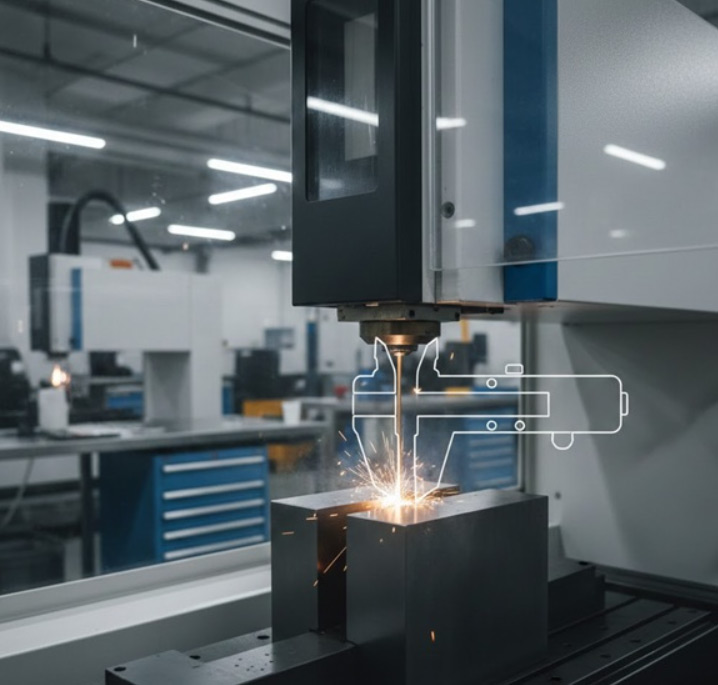
Struggling with parts that don’t fit right? Imagine spending hours on a die or mold, only to scrap it because tolerances are off by a few microns. In precision manufacturing, loose tolerance of EDM wire cutting can kill your profits, delay projects, and frustrate customers. Tool rooms, die & mold makers, and precision shops know this pain all too well. That’s why understanding tolerance of EDM wire cutting is your first step to flawless results. In this guide, we’ll cut through the hype, share real-world numbers, and help you pick machines that deliver.
Why Tolerance Matters in Wire EDM Machining
Tolerance in machining means how close your finished part matches the design—down to microns. In wire EDM, it’s the edge that separates good parts from perfect ones.
For tool rooms and die makers, tight tolerances mean repeat business. Precision manufacturers in aerospace or automotive can’t afford errors. Marketing claims scream “micron accuracy,” but real tolerance depends on your setup. Expect honest ranges here—no fluff.
What Does “Tolerance” Mean in EDM Wire Cutting?
Dimensional tolerance is the allowed variation in size, like ±0.01 mm on a hole. In EDM wire cutting, it covers:
- Linear tolerance: Straight-line accuracy, e.g., length or width.
- Profile tolerance: Curved or complex shapes staying true to CAD.
- Squareness and corner accuracy: Right angles and sharp radii without rounding.
EDM shines over milling because sparks erode hard materials without force—no chatter, no tool deflection. Result? Tighter tolerances in tough spots.
Typical Tolerance Range in EDM Wire Cutting
Industry standards give these realistic ranges:
- Single cut: ±0.015–0.025 mm for most jobs.
- Multi-cut (skim): ±0.005–0.015 mm for high-precision work.
Thicker material hurts accuracy—40 mm steel might hit ±0.020 mm single cut, but 10 mm drops to ±0.015 mm. These are shop-floor numbers, not lab tests.
Single Cut vs Multi Cut: Impact on Tolerance
Single cutting uses one pass: fast (120–180 mm/min), good for roughing, but looser tolerance (±0.015–0.025 mm) and rougher finish (Ra 2.5 μm).
Multi cutting (skim cuts) adds 2–6 passes: tighter tolerance (±0.005–0.015 mm), smoother finish (Ra <1.5 μm), but doubles time.
Use multi-cut for molds or punches. Skip it for prototypes where speed wins.
Key Factors That Affect EDM Wire Cutting Tolerance
Machine Design and Rigidity
A rigid bed, linear guides, and anti-vibration mounts hold steady. Berlin Machineries’ cnc edm wire cut machines uses ceramic guides for rock-solid cuts.
Servo Control System
Stable servos track wire path precisely. Premium models with high-response motors keep gaps consistent, nailing tolerances.
Wire Type and Diameter
Ø0.12–0.25 mm wires balance speed and precision. Thinner wires (0.12 mm) boost accuracy but slow you down.
Dielectric Fluid Quality and Filtration
Dirty fluid sparks unevenly—ruins tolerance. Filtered systems like our dielectric units keep it clean for ±0.01 mm repeats.
Workpiece Material and Thickness
Tool steel holds ±0.015 mm easy. Carbide or thick alloys (over 50 mm) need multi-cuts and push limits to ±0.020 mm.
Surface Finish vs Tolerance: Understanding the Relationship
Ra (surface roughness) and tolerance go hand-in-hand—smoother finishes demand tighter control. Ra <1.5 μm often pairs with ±0.010 mm tolerance.
Prioritize finish for molds touching plastic. Tolerance rules for fits and assemblies.
EDM Wire Cutting Tolerance vs CNC Machining Tolerance
Aspect | Wire EDM | CNC Milling |
Typical Tolerance | ±0.005–0.025 mm | ±0.01–0.05 mm |
Hard Materials | Excels (tool steel, carbide) | Struggles without specials |
Complex Shapes | No problem—untouched surfaces | Tool access limits |
Cost for Tight Specs | Efficient for low volume | High tooling/wear |
EDM wins for intricate dies. CNC suffices for simple aluminum parts.
Applications That Require Tight Wire EDM Tolerances
- Die and mould manufacturing: Punches with ±0.01 mm for flawless stamping.
- Precision punches and dies: Square corners at ±0.015 mm.
- Aerospace/automotive tooling: Turbine slots holding microns.
- Medical/electronics: Implants and connectors with zero defects.
Common Misconceptions About Wire EDM Tolerance
- “All machines hit microns”: Budget rigs drift to ±0.03 mm. Servo quality matters.
- “Tighter is always better”: Over-spec costs time—match to need.
- “Just buy the machine”: Operator skill and setup drive 50% of results.
How to Choose the Right Wire EDM Machine for Your Tolerance Requirements
Check these before buying:
- Servo system: High-performance for stable gaps.
- Multi-cut capability: Controller like our CNC Multicut for skim passes.
- Real specs: Test cuts beat brochures—ask for demos.
Match to your jobs: PS-7745S for mid-size molds, PS-7755S for heavy precision.
Conclusion: Setting Realistic Expectations for EDM Wire Cutting Accuracy
Wire EDM delivers ±0.005–0.025 mm reliably—game-changing for precision work. It’s your edge in dies, molds, and tooling. Skip spec-sheet hype; focus on servo power, filtration, and real tests. Invest smart with Berlin Machineries for tolerances that build your business.
FAQ
What is the maximum tolerance achievable in wire EDM?
±0.005 mm with multi-cuts on thin stock—real-world max.
Can wire EDM achieve ±0.01 mm consistently?
Yes, on most materials under 40 mm with good setup.
Does tighter tolerance increase machining cost?
Yes—multi-cuts add 50–100% time, but save rework.
Is wire EDM suitable for high-volume precision production?
Best for low-to-medium runs; CNC scales better for thousands.

Leave a Reply