

What is EDM Wire Used For? – Beginner’s Guide to EDM Wire Applications
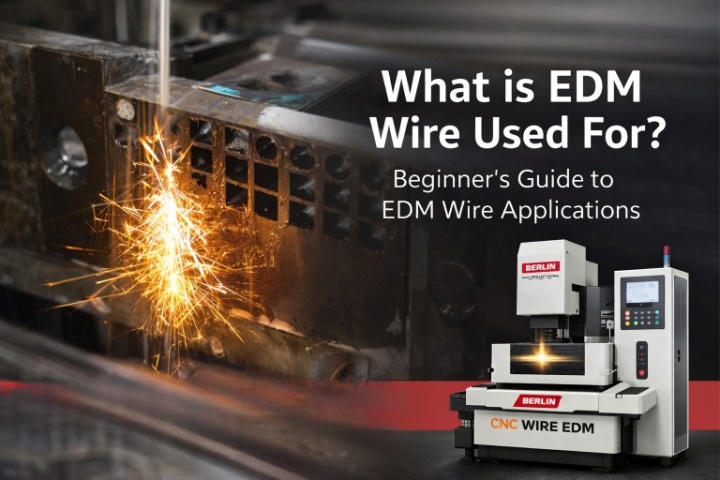
EDM wire is used to cut electrically conductive metals with high precision. This process is called Wire EDM (Electrical Discharge Machining). Instead of using a blade, a thin electrically charged wire removes material through controlled sparks.
Because there is no direct contact, the process produces accurate cuts and smooth finishes. Wire EDM is widely used in modern manufacturing to create complex shapes and precision parts.
What is EDM Wire?
EDM wire is a thin metal wire used as a cutting tool in a Wire EDM machine. The wire does not touch the material directly. Instead, it creates controlled electrical sparks that slowly remove material and produce accurate cuts.
Because there is no physical contact, EDM wire can cut hard materials without applying pressure. This helps prevent damage and keeps the part stable during machining.
In simple terms, the wire carries electrical energy that shapes the material with high precision.
Working Principle of Wire EDM
The working principle of wire EDM is simple to understand:
- A thin wire moves continuously between guides.
- Electrical current passes between the wire and the metal workpiece.
- Small sparks remove tiny particles of material.
- The machine follows a programmed path to create the required shape.
Since there is no cutting pressure, the process achieves very high accuracy and smooth surface finish. This is why wire EDM is preferred for precision manufacturing.
What Wire is Used in an EDM Machine?
Different types of wires are used depending on machining requirements.
Brass Wire
The most commonly used EDM wire. It offers stable cutting and good conductivity.
Zinc-Coated Brass Wire
Improves cutting speed and surface finish. Often used for high-performance machining.
Copper Wire
Provides good electrical conductivity but is less commonly used compared to brass.
Diffused or Special Coated Wire
Used in advanced applications where higher precision or faster cutting is required.
Choosing the right wire depends on material type, required finish, and production needs.
Main Uses of EDM Wire in Manufacturing
These applications show why EDM wire is important in modern industrial production.
Why EDM Wire is Used Instead of Traditional Cutting Tools
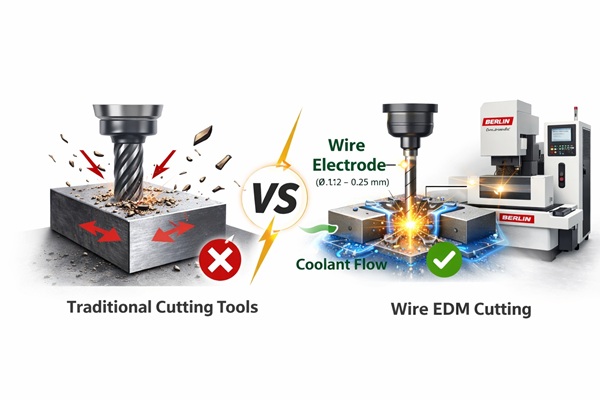
Traditional machining uses physical cutting tools that apply pressure on the material, which can cause tool wear and deformation.
Wire EDM offers several advantages:
- No cutting pressure on the workpiece
- Suitable for hardened materials
- High dimensional accuracy
- Ability to cut complex shapes
- Better surface finish
Manufacturers looking for stable cutting and precise results often prefer advanced CNC Wire Cut EDM machines because they provide consistent performance for industrial production.
Can Wire EDM Cut Glass?
No. Wire EDM cannot cut glass.
The EDM process works only on electrically conductive materials. Since glass is non-conductive, it cannot be machined using wire EDM.
Common materials cut using EDM include:
- Tool steel
- Stainless steel
- Carbide
- Titanium
- Hardened metals
What is the Thickness Limit for Wire EDM?
The thickness limit depends on the machine’s capacity and setup. Modern wire EDM machines can cut thin sheets as well as thick metal blocks.
In industrial applications, manufacturers select the machine based on:
- Workpiece thickness
- Material type
- Accuracy requirement
- Cutting speed needed
Higher-capacity machines are designed for thicker workpieces while maintaining precision.
Can You Drill Holes with Wire EDM?
Wire EDM is mainly used for cutting profiles and complex shapes. It is not typically used for drilling holes.
For micro or deep hole applications, manufacturers use CNC EDM drill machines, which are specially designed for accurate small hole drilling in hardened and conductive materials. These holes are often used as starter holes before wire EDM cutting begins.
Disadvantages of Wire EDM
Although wire EDM offers many advantages, it also has some limitations:
- Works only on conductive materials
- Cutting speed can be slower compared to some traditional methods
- Wire consumption adds operational cost
- Not ideal for simple rough machining jobs
Understanding these limitations helps manufacturers choose the right machining method.
Conclusion
EDM wire is used for precise, non-contact cutting of conductive materials in modern manufacturing. It plays a key role in industries like tool making, automotive, aerospace, and precision engineering where accuracy and surface finish are critical.
By using electrical sparks instead of physical cutting force, wire EDM makes it possible to machine complex shapes, hardened metals, and delicate components with excellent precision.
If your manufacturing process requires reliable accuracy and consistent results, Wire EDM technology is a practical and proven solution.

Leave a Reply