

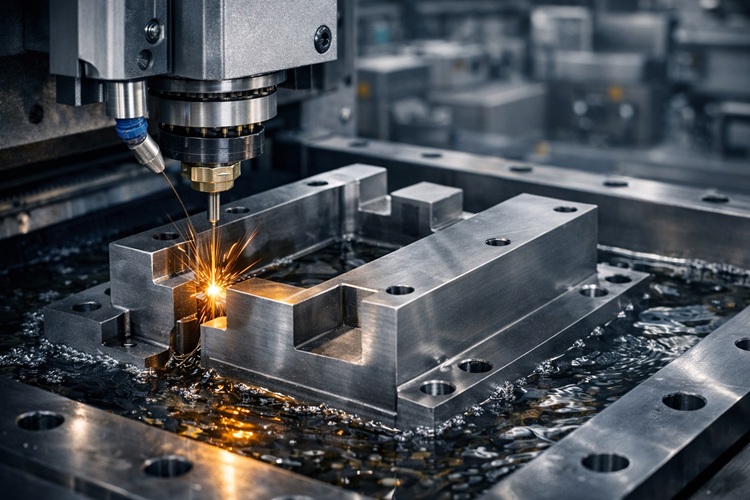
Common Metal Press Tool Problems and Solutions
If you work in a tool room or manage stamping production, this situation may sound familiar.
The press is set correctly. The material grade is approved. Yet parts still fail inspection. Dimensions drift. Burrs appear. Tools wear out faster than expected. Rework increases, and delivery timelines come under pressure.
These challenges are not rare today. In fact, common metal press tool problems and solutions have become a major concern for manufacturers as tolerance requirements tighten and materials become harder. Most of these problems are not caused by the press itself—they start much earlier, during press tool manufacturing.
Understanding the real causes behind press tool problems is the first step toward long-term, reliable solutions.
Why Press Tool Problems Are Increasing Today
Modern stamping operations face higher expectations than ever before. Customers demand tighter tolerances, better surface finish, and consistent quality across large production volumes.
At the same time:
- Press tools are made from hardened and high-strength steels
- Tool rooms are under pressure to reduce rework and downtime
- Any small error directly impacts final part quality
As requirements increase, even minor inaccuracies in press tools can cause serious production issues. This is why press tool accuracy has become critical for achieving stable and repeatable stamping results.
Understanding the Root Cause of Most Press Tool Problems
Many press tool issues appear during production, but their root cause lies before the tool ever reaches the press.
Key factors include:
- Tool design accuracy
- Machining method used for punches and dies
- Consistency during tool manufacturing
Conventional, force-based machining introduces cutting pressure, heat, and tool wear. These factors can affect geometry, surface finish, and internal stress in press tool components. Over time, these small issues show up as performance problems on the shop floor.
Precision in tool manufacturing plays a decisive role in how well a press tool performs in real production conditions.
Common Metal Press Tool Problems Faced by Tool Rooms
1. Dimensional Inaccuracy in Press Tools
One of the most frequent problems faced by tool rooms is stamped parts not matching design drawings. Even a small variation between punch and die dimensions can lead to inconsistent part size, especially during long production runs.
Impact on production:
- Poor part fit during assembly
- Repeated quality rejections
- Increased inspection and rework
This issue usually occurs because conventional machining introduces cutting force, which can cause tool deflection. Maintaining accuracy becomes even more difficult when machining hardened or heat-treated materials. Over time, these inconsistencies across tool components lead to dimensional variation in stamped parts. In many cases, dimensional inaccuracy is the first visible sign of deeper machining-related issues in press tool manufacturing.
2. Burr Formation and Poor Edge Quality
Burr formation on stamped components is another common challenge. Burrs not only affect part appearance but also increase finishing time and cost. In industries with strict quality requirements, burrs are simply not acceptable.
Impact on production:
- Additional deburring operations
- Higher labor and processing cost
- Inconsistent part quality
Burrs usually occur due to incorrect punch–die clearance and rough tool surfaces. When punches and dies are not machined with proper accuracy and surface finish, material flow during stamping becomes uneven, resulting in poor edge quality. Clean, burr-free edges always begin with accurately machined tooling.
3. Premature Tool Wear and Punch Breakage
Frequent tool wear or sudden punch breakage disrupts production schedules and increases maintenance effort. This problem is especially common when tools are used for hardened or high-strength materials.
Impact on production:
- Frequent tool replacement
- Press downtime
- Higher tooling costs
The root cause is often high internal stress introduced during force-based machining. Heat-affected zones and micro-cracks formed during cutting may not be visible initially, but they grow under stamping loads. Tools weakened during machining are far more likely to fail during actual production.
4. Misalignment and Assembly Issues
Press tools are expected to assemble smoothly and maintain alignment throughout their working life. When this does not happen, setup time increases and press performance becomes unstable.
Impact on production:
- Longer setup time
- Reduced repeatability
- Unstable press operation
Misalignment is commonly caused by profile mismatch between mating components and inconsistent machining accuracy. When tool parts are not produced with repeatable precision, assembly becomes difficult and alignment suffers. Accurate profiles and consistent machining are essential for stable press tool performance.
5. High Rejection Rates and Rework
When multiple small issues occur together, rejection rates rise quickly. What starts as a minor problem soon becomes routine rework and scrap.
Impact on production:
- Increased scrap generation
- Delayed deliveries
- Higher overall production cost
These issues are usually the result of cumulative dimensional errors, inconsistent surface finish, and lack of consistency in tool geometry. In most cases, high rejection rates point back to how the press tool was originally machined rather than how the press is operated.
Why Conventional Machining Struggles with Press Tool Accuracy
Traditional machining methods rely on physical cutting force. As materials become harder and geometries more complex, this approach reaches its limits.
Key limitations include:
- Tool deflection during cutting
- Rapid tool wear in hardened steels
- Heat generation affecting material structure
- Difficulty machining sharp internal corners
Because of these limitations, conventional machining often struggles to deliver the accuracy and consistency required for modern press tools.
How Precision EDM Machining Solves Press Tool Problems
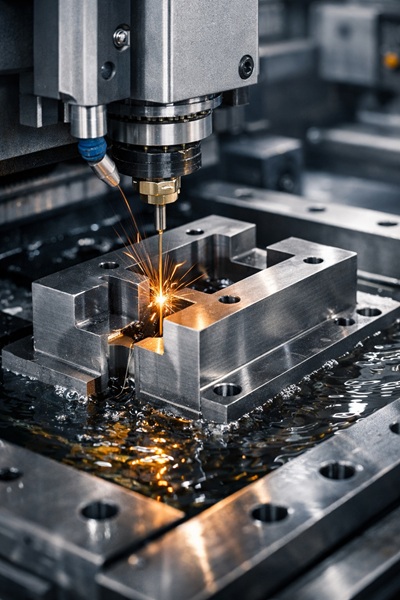
Electrical Discharge Machining (EDM) removes material using controlled electrical discharges rather than physical cutting force. This non-contact machining approach eliminates many limitations of conventional methods and directly addresses the root causes of common press tool problems.
Achieving Tight Dimensional Tolerances
Because EDM does not apply cutting pressure on the workpiece, tool deflection is eliminated. This allows press tool components to be machined with high accuracy and repeatability, even when working with hardened or heat-treated materials. As a result, punches and dies maintain consistent dimensions throughout their service life.
Improved Surface Finish and Edge Quality
EDM machines use controlled, multi-cut operations to produce smooth surfaces and clean edges. This significantly reduces burr formation on press tools and often eliminates the need for secondary polishing or finishing processes, saving both time and cost.
Longer Tool Life and Reduced Breakage
Stress-free material removal minimizes internal cracks and heat-affected zones within the tool. Press tools manufactured using EDM are structurally stronger and less prone to premature wear or breakage, resulting in longer tool life and reduced downtime.
Accurate Complex Profiles and Sharp Corners
EDM is particularly effective for machining intricate shapes, narrow slots, and sharp internal corners that are difficult to achieve with conventional machining. This makes it ideal for precision punches, dies, and inserts used in modern press tools.
Benefits of Using CNC Wire Cut EDM for Press Tool Manufacturing
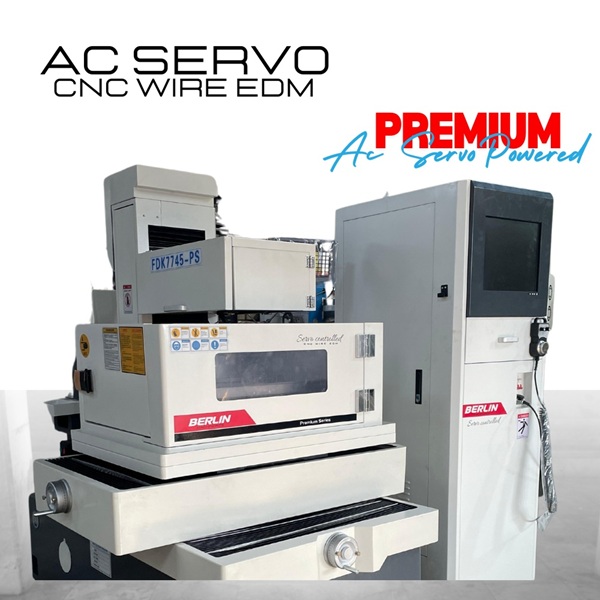
CNC Wire Cut EDM plays a key role in modern tool rooms by delivering:
- High precision and repeatability
- Reduced rework and rejection
- Stable performance in hardened materials
- Improved press tool reliability
- Lower long-term tooling costs
By producing accurate and consistent tooling, Wire Cut EDM supports smooth and predictable stamping operations.
Choosing the Right Machining Approach for Reliable Press Tools
EDM is not required for every application, but it becomes the right choice when press tools demand:
- Tight tolerances
- Complex geometries
- Smooth surface finish
- Long-term dimensional stability
Understanding when to use precision EDM machining helps tool rooms balance performance, cost, and productivity.
Conclusion: Building Reliable Press Tools Starts with Precision Machining
Most press tool problems are not press problems—they are machining problems. When tools are manufactured with accuracy, consistency, and stability, stamping operations become reliable and predictable.
Choosing the right machining technology plays a critical role in meeting today’s demanding quality standards. Precision EDM machining, especially CNC Wire Cut EDM, enables tool rooms to produce press tools that perform consistently under real production conditions.
Reliable press tools begin with precision machining—and precision machining begins with the right approach.

Leave a Reply