

What Are the Applications of Radial Drilling Machines?
When you have a large steel plate, heavy casting, or long structural frame to drill, the real problem is not just making a hole. The real problem is moving the job again and again, setting it up properly, and still getting the hole in the exact right place.
That is where the applications of radial drilling machines become clear. A radial drill is built for workpieces that are too big, too heavy, or too awkward for a normal drilling machine. Instead of moving the job, you move the arm and spindle over the workpiece, which saves time and makes production easier.
In industries where speed, reach, and accuracy matter, this machine becomes a practical solution. It is not just a drill. It is a heavy-duty workshop tool that supports drilling, reaming, tapping, counterboring, and spot-facing in one setup. That flexibility is one of the main reasons it is used across fabrication, automotive, construction, shipbuilding, and tool room work.
What is a radial drilling machine?
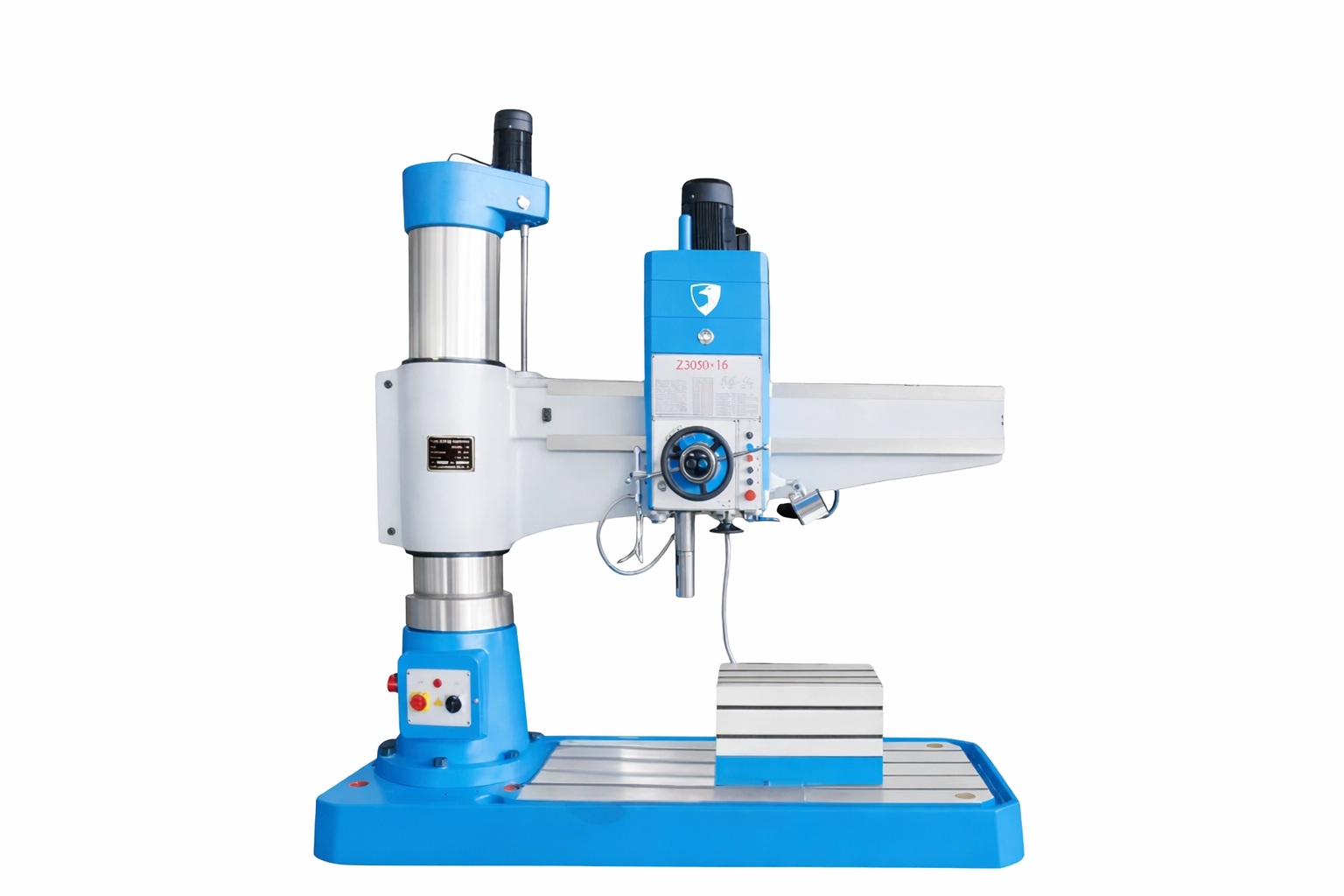
A radial drilling machine is designed with a horizontal arm that can swing around a vertical column. The drill head moves along this arm, and the arm itself can be positioned at different heights and angles. This gives the operator wide reach and flexibility, especially when working on large components. In simple terms, the spindle comes to the work instead of forcing the work to come to the spindle.
That difference matters a lot in production. If a job weighs hundreds or even thousands of kilos, lifting and repositioning it for every hole is slow and risky. A radial arm drill reduces that problem and helps maintain better repeatability.
Why industries prefer radial drilling machines
The biggest advantage of a radial drill machine is reach. The second is control. The third is consistency.
With a radial arm drilling machine, operators can position the spindle exactly where they need it without disturbing the workpiece. This is useful when drilling on wide steel plates, long beams, bulky castings, or assembled structures. The machine also supports repeatable depth control, so every hole in a batch can match the same requirement.
In production environments, this saves both time and labour. It also reduces errors caused by repeated lifting, shifting, and re-clamping.
Main applications of radial drilling machines
Manufacturing and fabrication
This is one of the most common uses of a radial drilling machine. Fabrication shops often work with steel plates, flanges, frames, brackets, and structural assemblies. These parts are usually too large to keep moving on a regular drill table. The radial arm makes it easier to drill multiple holes in different positions without changing setup after every operation.
For fabrication work, the machine is valuable because it handles repetitive hole patterns with less effort. It helps when the workshop needs clean, accurate holes in thick material and when production speed matters.
Automotive industry
Automotive workshops and component manufacturers use radial drilling machines for parts like engine blocks, chassis members, suspension brackets, and large castings. These jobs often involve different materials, from cast iron to alloy steel, so variable spindle speed becomes important. The source page notes that the machine range supports different capacities and speed options, with the popular Z3050X16/1 model suited to general fabrication and tool room work, while heavier jobs may need higher-capacity models.
The real value in automotive use is flexibility. A single machine can support many hole-making operations across different part sizes.
Construction and infrastructure
Construction workshops use radial drilling machines to drill bolt holes in steel beams, supports, crane parts, and structural frames. In this kind of work, the material is often long, heavy, and difficult to shift. A radial drill helps place the spindle at the right point without moving the full structure.
This is especially useful when hole position has to match a structural drawing exactly. A small error can create fit-up problems during assembly, so repeatable drilling matters.
Shipbuilding and marine engineering
Shipbuilding is one of the best examples of where a radial drilling machine shines. Hull sections, bulkheads, deck plates, and heavy marine fittings often require precise hole patterns in thick steel. The page highlights that the largest model, the Z30125X40, is designed for shipbuilding and heavy engineering, with a 125 mm drilling capacity and long arm reach.
In marine work, the component size is a challenge. Many parts cannot be moved easily, so the drill must do the moving. That is exactly what this machine is built for.
Tool rooms and precision engineering
Tool rooms use radial drilling machines for jig plates, fixture bases, and tooling components where hole position accuracy is important. These jobs may not always involve the heaviest material, but they do demand clean, accurate, repeatable results. The machine supports that by giving the operator more control over spindle position and drilling depth.
For precision work, the machine works well alongside milling machines, lathes, and surface grinders in a complete workshop setup.
What operations can a radial drill machine perform?
A radial drill is more versatile than many people expect. It is not limited to simple drilling. In many workshops, it is used for:
- Drilling
- Reaming
- Tapping
- Counterboring
- Spot-facing
These operations make it a useful multi-purpose machine, especially when the workshop wants to reduce setup time and avoid shifting the same workpiece from one machine to another. The ability to drill angled holes with a swiveling head also adds more value in real production work.
Radial drill machine vs pillar drill machine
A pillar drill is better for small and medium jobs that are easy to move. A radial drill machine is better when the workpiece is large, heavy, or difficult to reposition. That is the main difference.
If your job can be placed easily on a fixed table, a pillar drill may be enough. But if you are handling steel structures, machine bases, heavy castings, or long fabricated parts, a radial drill is the more practical choice. The source page also points out that radial drills are suitable when workpieces weigh over 400 kg or are too wide to move comfortably.
That is the simplest way to decide: move the job to the drill if the part is small; move the drill to the job if the part is large.
How to choose the right radial drilling machine
Choosing the right radial drilling machine starts with the largest hole size you need. After that, check the arm reach, motor power, speed range, and spindle taper. These are not small details. They directly affect performance on the shop floor.
A few practical points matter most:
- Drilling diameter should cover your largest hole requirement
- Arm reach should match the width of your biggest workpiece
- Motor power should suit the hardest material you work with
- Speed range should support both large and small drill sizes
- Spindle taper should match your existing tooling, or you should budget for new tooling
This is where many buyers make mistakes. They focus only on drilling capacity and ignore reach or power. A machine may look suitable on paper, but if it cannot reach across your part or handle your material well, it will slow production instead of improving it.
Why this machine remains important in modern workshops
Even with newer CNC and automated systems available, radial drilling machines still have a strong place in industrial work. The reason is simple: they solve a real physical problem. Large workpieces are difficult to move, and repeated repositioning wastes time. A radial arm drill saves that effort while keeping the process reliable and cost-effective.
That makes it useful for shops that need dependable performance without overcomplicating the workflow. It is a machine built for practical production, not just theory.
Final thoughts
The applications of radial drilling machines are wide because the machine itself is flexible. It helps in fabrication, automotive work, construction, shipbuilding, heavy engineering, and tool room operations. Wherever large or heavy components need accurate holes, this machine gives the operator reach, control, and consistency.
If your workshop handles bulky parts, structural assemblies, or repetitive drilling tasks, a radial drilling machine can improve speed, reduce handling, and make production smoother. The key is to match the model to your actual job size, drilling capacity, and reach requirements.
FAQs
What industries use radial drilling machines?
They are widely used in fabrication, automotive, construction, shipbuilding, heavy engineering, and tool rooms.
What operations can be done on a radial drilling machine?
It can perform drilling, reaming, tapping, counterboring, and spot-facing in one setup.
Why is a radial drill better for large workpieces?
Because the arm and spindle move to the workpiece, so you do not need to shift heavy jobs repeatedly.
Is a radial drilling machine good for precision work?
Yes. It is especially useful when hole position, repeatability, and depth control matter in production.
