

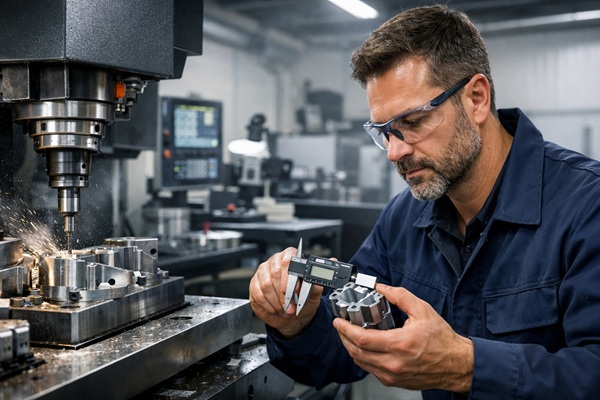
Are you seeing more rejected parts on the inspection table? Are operators spending extra time adjusting offsets or polishing surfaces? If you’re trying to reduce rework and scrap rates in automotive CNC machining, you’re likely facing pressure from both production targets and quality standards.
In automotive manufacturing, tolerances are tight. Components must fit perfectly during assembly. Even small deviations can cause vibration, wear, or alignment issues. When parts fail inspection, the cost is not limited to material. It includes labor, machine time, delivery delays, and sometimes customer dissatisfaction.
Rework is not just a quality issue. It directly affects profitability and production stability. The good news is that most scrap problems are preventable when processes are properly controlled.
Where Rework Usually Begins
Rework rarely appears suddenly. It develops gradually.
At first, there may be minor dimensional variation. Operators compensate by adjusting offsets. Parts pass inspection, but consistency starts slipping.
Then surface finish becomes inconsistent. Some parts require manual polishing. Cycle time increases slightly, but production continues.
Over time, scrap percentage grows. Hardened material jobs become difficult. Alignment problems appear in dies or plates. Delivery timelines become tighter.
Eventually, rejected batches or customer complaints force management to investigate.
This pattern is common in automotive tool rooms producing punch plates, die inserts, injection mold components, and precision structural parts.
Common Causes of Scrap in Automotive CNC Machining
Before improving anything, it’s important to understand the typical root causes.
1. Tolerance Deviation
Dimensional variation often comes from:
- Tool deflection under load
- Machine vibration or lack of rigidity
- Thermal expansion
- Axis misalignment or poor calibration
Even high-quality machines can produce variation if maintenance or process control is weak.
2. Surface Finish Problems
Poor surface finish may result from:
- Incorrect cutting parameters
- Worn tools
- Insufficient finishing passes
- Inconsistent coolant application
Surface roughness sometimes leads to additional polishing. While polishing can improve appearance, it increases labor time and does not correct dimensional errors.
3. Hardened Material Challenges
Automotive components frequently use heat-treated steels such as H13 and Cr12. Machining hardened materials increases:
- Tool wear
- Risk of dimensional drift
- Probability of surface defects
Conventional cutting tools apply mechanical force, which can introduce stress in hard materials.
For automotive mold cavities, die inserts, and complex 3D shapes in hardened steel, Die Sinking EDM is often used when conventional machining struggles to maintain dimensional stability. Because the process removes material using controlled electrical discharge, it reduces mechanical stress and supports precise cavity formation in difficult materials.
4. Complex Geometry Limitations
Sharp internal corners, deep slots, thin sections, and intricate profiles are difficult to machine using rotating tools. Tool radius limitations and vibration can create profile mismatch, especially in precision dies.
Practical Steps to Reduce Rework and Scrap
Reducing scrap requires structured action, not quick fixes.
Step 1: Review Scrap Data Carefully
Start by analyzing inspection reports. Identify patterns:
- Are failures mostly dimensional?
- Do they occur in hardened materials?
- Are certain geometries causing repeated rejection?
Do: Collect measurable data before changing processes.
Don’t: Assume operator error without evidence.
Data-driven improvement is more reliable than guesswork.
Step 2: Standardize Machining Parameters
Inconsistent parameter settings create inconsistent results.
Document and validate cutting speeds, feed rates, depth of cut, and finishing strategy for each material type. Once proven, standardize them.
Do: Lock validated parameters for repeat jobs.
Don’t: Allow frequent undocumented adjustments.
Consistency improves repeatability.
Step 3: Improve Machine Stability and Maintenance
Machine rigidity and alignment directly influence tolerance control.
Regularly check:
- Axis backlash
- Spindle condition
- Thermal behavior
- Fixture rigidity
Ignoring small vibration or alignment shifts can lead to cumulative dimensional errors.
Step 4: Select the Appropriate Machining Method
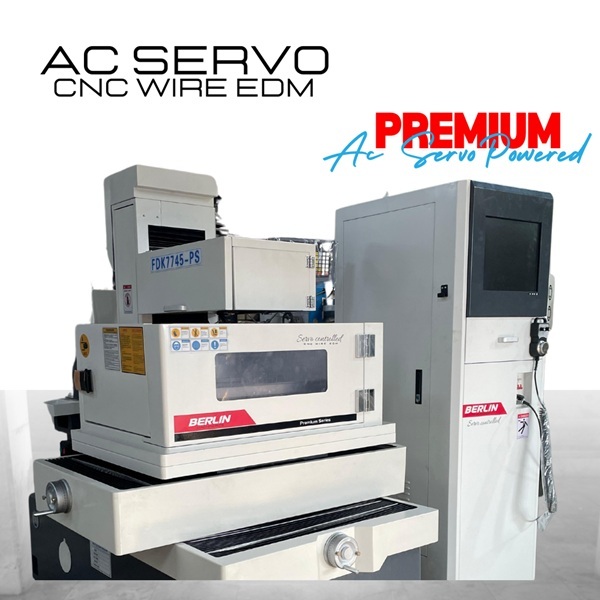
When machining hardened materials or complex profiles, conventional cutting methods may struggle due to mechanical stress and tool wear.
Non-contact processes such as CNC Wire Cut EDM remove material through controlled electrical discharge instead of physical force. Because there is minimal mechanical stress on the workpiece, dimensional stability in hardened materials can improve.
This does not mean EDM eliminates scrap automatically. However, when applied correctly for suitable applications such as intricate profiles, tight tolerances, and hardened steels—it can help improve repeatability and reduce mechanical distortion.
The key is matching the machining method to the job requirement.
Step 5: Optimize Finishing Strategy
Surface finish should be controlled during machining, not corrected afterward.
Multi-cut finishing strategies in appropriate processes can help achieve smoother surfaces with better dimensional control.
Do: Plan finishing as part of the machining cycle.
Don’t: Depend entirely on manual polishing to correct primary machining issues.
Step 6: Focus on Process Control and Servo Stability
In precision operations, consistent control of cutting conditions matters more than peak speed.
Stable servo systems and proper gap control (in EDM processes) help maintain consistent cutting conditions throughout long cycles. This supports dimensional stability and reduces unexpected variation.
The goal is steady performance, not maximum speed.
Common Misconceptions That Increase Scrap
Many scrap problems continue because of incorrect assumptions.
One belief is that increasing cutting speed improves productivity. In reality, higher speed without stability can increase variation and rework.
Another misconception is that rework is unavoidable in precision manufacturing. While minor adjustments may occur, consistent high scrap levels usually indicate process instability.
Some manufacturers believe that upgrading cutting tools alone will solve accuracy problems. Tool quality is important, but machine rigidity, process control, and proper method selection play a larger role.
Finally, polishing is often seen as a solution. In practice, polishing increases cost and should refine surface quality—not correct dimensional error.
When to Re-Evaluate Your Machining Capability
Consider reviewing your machining system if you observe:
- Scrap percentage consistently rising
- Difficulty maintaining ±0.02 mm tolerance
- Frequent tool wear in hardened steels
- Recurring alignment mismatch in dies
- Increasing customer feedback on quality issues
In such cases, incremental adjustments may not be enough. A structured review of machining method, machine capability, and process stability is necessary.
Upgrading should be viewed as a long-term productivity decision rather than a short-term expense.
Future Challenges in Automotive CNC Machining
Automotive manufacturing is evolving rapidly.
Electric vehicle components require precision in new materials. Lightweight alloys and high-strength steels demand careful machining control. Export markets expect strict dimensional consistency and traceability.
As tolerance expectations tighten, processes that were “acceptable” in the past may generate higher scrap rates in the future.
Preparing now by strengthening process stability and method selection reduces risk later.
Building a Stable, Low-Scrap Production System
Reducing scrap is not about eliminating all variation. It is about minimizing avoidable variation.
A stable production system includes:
- Controlled machining parameters
- Proper maintenance routines
- Correct process selection
- Consistent finishing strategy
- Continuous measurement and review
Advanced machining technologies, including precision CNC Wire Cut EDM systems for suitable applications, can support high-accuracy cutting and stable performance in hardened materials when integrated correctly into the production process.
The focus should always remain on process reliability.
Conclusion: Scrap Reduction Is a Strategic Responsibility
Rework and scrap are not random events. They are signals that something in the process needs attention.
With proper data analysis, standardized parameters, stable machinery, and appropriate machining methods, scrap rates can be reduced significantly.
For automotive manufacturers, maintaining tight tolerances and consistent surface finish is not optional. It is essential for long-term competitiveness.
The right process decisions today protect your margins, strengthen customer trust, and prepare your operations for the increasing precision demands of tomorrow.
