

How Does Wire EDM Compare to CNC Milling for Precision Parts?
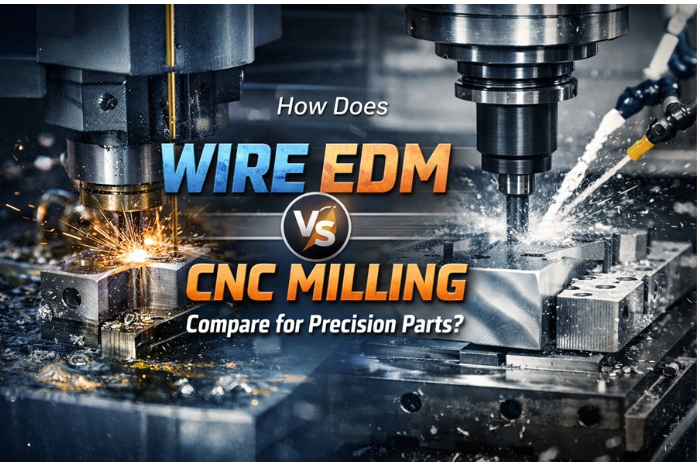 Imagine you are standing on your shop floor with a piece of hardened H13 tool steel in your hand. Your customer needs a complex internal shape with a tolerance of 5 microns. You look at your high-speed CNC mill and hesitate. Will the end mill snap? Will the heat from the friction warp the metal? Will those sharp internal corners be impossible to reach with a round tool?
This is a common headache for modern manufacturers. Choosing the wrong method leads to broken tools, wasted material, and missed deadlines. To stay profitable, you need to know: How does wire EDM compare to CNC milling for precision parts? This decision directly impacts your manufacturing accuracy, your costs, and your reputation for quality.
Imagine you are standing on your shop floor with a piece of hardened H13 tool steel in your hand. Your customer needs a complex internal shape with a tolerance of 5 microns. You look at your high-speed CNC mill and hesitate. Will the end mill snap? Will the heat from the friction warp the metal? Will those sharp internal corners be impossible to reach with a round tool?
This is a common headache for modern manufacturers. Choosing the wrong method leads to broken tools, wasted material, and missed deadlines. To stay profitable, you need to know: How does wire EDM compare to CNC milling for precision parts? This decision directly impacts your manufacturing accuracy, your costs, and your reputation for quality.
Understanding Precision Machining in Modern Manufacturing
In the world of precision manufacturing, the word “precision” has changed. It used to mean “pretty close.” Today, it means high tolerance parts where even a tiny mistake—the size of a speck of dust—can cause a part to fail. When we talk about precision, we are looking at three things:- Tolerance: How close the final part is to the exact design size.
- Surface Finish: How smooth the metal feels (measured in Ra).
- Complexity: How many tiny, intricate details are in the design.
What Is Wire EDM and How Does It Work?
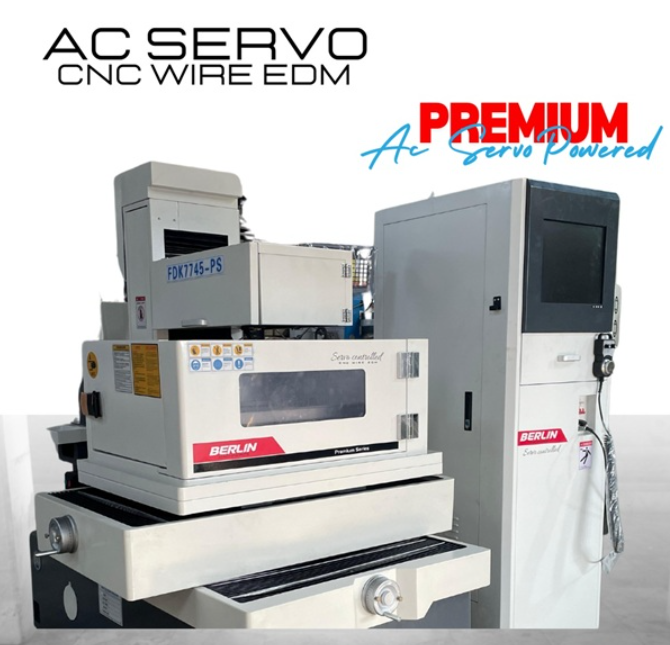 Wire EDM (Electrical Discharge Machining) is often called “spark erosion.” Instead of a sharp blade, it uses a very thin wire—usually made of brass or molybdenum.
This process is a non-contact method. The wire never actually touches the metal. Instead, it creates a path of controlled electrical sparks in a tank of special fluid. These sparks melt and vaporize the metal, bit by bit. Because there is zero cutting force, you can cut through the hardest metals without the part bending or moving.
Wire EDM (Electrical Discharge Machining) is often called “spark erosion.” Instead of a sharp blade, it uses a very thin wire—usually made of brass or molybdenum.
This process is a non-contact method. The wire never actually touches the metal. Instead, it creates a path of controlled electrical sparks in a tank of special fluid. These sparks melt and vaporize the metal, bit by bit. Because there is zero cutting force, you can cut through the hardest metals without the part bending or moving.
What Is CNC Milling and How Does It Work?
CNC Milling is the workhorse of most shops. It is a subtractive machining process that uses physical force. A high-speed rotating cutter (like an end mill) moves against the metal, “biting” off chips to create a shape. It is a mechanical process. Because it uses physical contact, it is incredibly fast at removing large amounts of metal. However, that contact also creates friction, heat, and “chatter,” which can affect the final accuracy of the part.Wire EDM vs CNC Milling – Core Technology Difference
The biggest difference between the two is Contact vs. Non-Contact. In a CNC milling machine, the tool pushes against the material. This creates cutting force. If you are trying to cut a very thin or delicate part, that force can cause the metal to distort or “bow.” In wire EDM, there is no force. The spark does the work. This results in non-contact machining with zero thermal distortion. You can cut a piece of metal as thin as a needle or as hard as a diamond without worrying about the part losing its shape.Wire EDM vs CNC Milling: Accuracy & Tolerance Comparison
When it comes to micron accuracy, Wire EDM is the clear winner.- Wire EDM: Machines like our FZT Series can hold tolerances as tight as 0.006mm. Since there is no tool to “bend” or “deflect,” the cut stays perfectly straight from top to bottom.
- CNC Milling: While mills are very accurate, they suffer from tool deflection. As the spinning tool pushes into hard metal, it bends slightly. This makes it difficult to maintain tight tolerance machining on deep cuts or very hard alloys.
Wire EDM vs CNC Milling: Surface Finish – Which Produces Better Results?
The quality of a surface is measured by its Ra finish (roughness).- CNC Milling: Because the tool “chops” at the metal, it often leaves tiny “tool marks” or swirls. To get a mirror finish, you usually have to spend hours hand-polishing the part.
- Wire EDM: This process produces a very consistent, matte finish. With our Super Series or Premium Servo Series, you can reach an Ra finish of 0.8. This is often smooth enough to be used directly in a mold or die without any extra polishing.
Wire EDM vs CNC Milling: Material Capability – Hardness & Heat-Treated Parts
In milling, the harder the metal, the more expensive it is to cut. Cutting hardened steel or carbide with a mill requires very expensive, specialized tools that wear out quickly. In wire cut EDM, hardness is not a problem. As long as the metal can conduct electricity, the wire can cut it. Whether you are machining carbide, titanium, or heat-treated H13 steel, the wire cuts through it with the same ease. This allows you to heat-treat your parts before cutting them, which prevents the parts from warping later.Wire EDM vs CNC Milling: Shape Complexity & Part Geometry
Can you cut a perfect 90-degree internal corner? A CNC mill uses a round tool. This means every internal corner will have a “radius” (a curve). You simply cannot get a sharp internal corner with a round spinning bit. Wire EDM uses a thin wire that acts like a vertical thread. It can create intricate profiles, sharp corners, and tiny internal slots that a mill cannot reach. This makes it the only choice for complex internal cut machining.Wire EDM vs CNC Milling: Speed, Tool Wear & Production Cost
- Speed: CNC Milling is much faster for “roughing” (removing large amounts of metal). Wire EDM is a slower, slower process.
- Tool Wear: In milling, you have to keep buying expensive cutting tools. In Wire EDM, your main cost is the wire. If you use our Super Series with molybdenum wire, the wire is reusable, making your machining cost much lower over time.
- Reliability: Wire EDM machines are designed for “lights-out” manufacturing. You can set the machine and leave it running all night without worrying about a tool snapping.
When CNC Milling Is the Better Choice
Milling is still the best option for:- Bulk material removal: Taking a large block and making it smaller quickly.
- Soft materials: Aluminum, mild steel, or plastics.
- 3D Contouring: Creating rounded, 3D shapes like a car’s side mirror.
When Wire EDM Is the Better Choice
Wire EDM is the superior choice for:- Precision dies and molds: Where sharp corners and microns matter.
- Hard materials: Anything above 40 HRC, like carbide or hardened tool steel.
- Micro features: Tiny parts for medical or electronics.
- Thin walls: Parts that are too delicate for the pressure of a milling tool.
Which One Should You Choose for Precision Parts?
The best manufacturing strategy usually involves a hybrid workflow.- Use CNC milling to “rough out” the shape and remove most of the metal while it is still soft.
- Heat-treat the part to make it hard and durable.
- Use Wire EDM to perform the final precision cutting to reach the exact microns and surface finish required.
Industries That Prefer Wire EDM Over CNC Milling
- Tool & Die: For creating the high-precision molds used in plastic injection.
- Aerospace: For turbine blades and engine parts made of tough alloys.
- Medical: For surgical tools and implants that require a perfect finish.
- Automotive: For the high-strength gears and precision components.
